

At this year’s Vinitaly, two masterclasses will focus on Hungarian wines, one on the versatile and distinctive indigenous variety Furmint and the other on the unique terroir of volcanic vineyards. Wine expert András Horkay will guide you through the six wines. Find out what he has to say.
The masterclass “A multidimensional Hungarian variety: Furmint” zooms in on one of Hungary’s leading varieties, Furmint. How would you describe Furmint to those unfamiliar with it?
It is an indigenous Hungarian variety and Tokaj is its home region. Furmint is Hungary’s preeminent white grape, and this is reflected in the quality of the wines made from it. In fact, it is one of the world’s leading premium white grape varieties, both in terms of its aroma profile and its ageing potential. It is clearly Hungary’s number one quality white grape variety, capable of producing both high quality reductive and barrel-aged dry wines, and is the backbone of one of the world’s most famous dessert wines, Tokaj Aszú. With its unique aroma character, excellent ability to reflect site characteristics, good ageing potential and wide range of stylistic possibilities, Furmint is clearly our country’s flagship variety.
There are several single-vineyard dry Furmints in the line-up. How important are these wines in the Hungarian premium white wine category?
Single-vineyard wines, particularly in the case of Tokaj and Furmint, always belong in the premium, often super-premium category, and it is through these wines that we can really understand the concept of terroir, how one vineyard differs from another, the differences in soils or even the nuances produced by altitude. The true greatness of Furmint lies in its ability to show these differences between vineyards with pinpoint precision, in structure and in aromas and in ageing potential. A single-vineyard Furmint can be a good alternative to a serious premier or grand cru Burgundy Chardonnay, a Vouvray Chennin blanc or an esteemed single-vineyard German Predikät Riesling.
The masterclass “In the land of volcanoes: a journey through powerful dry wines and the incomparable Aszú” will take participants on a journey to two volcanic wine regions, Somló and Tokaj. Focusing on just one or two aspects, how would you highlight the similarities and differences between the two wine regions?
In both regions the vineyards were planted on volcanic soils many hundreds of years ago, on mineral-rich bedrock. This is evident in the aromas, style and ageing potential of the wines. There is also an overlap in the varieties planted in the two wine regions, such as Furmint and Hárslevelű. But this is where the similarities end. Tokaj and Somló are two wine regions with completely different characteristics: while the area under vine in Tokaj is more than 5,000 ha, in Somló it is less than 500 ha, making it Hungary’s smallest wine region. Located in the foothills of the Zemplén Mountains in northern Hungary, Tokaj has a slightly cooler continental climate, but the region’s two rivers, the Tisza and the Bodrog, significantly moderate the climate of the wine region.
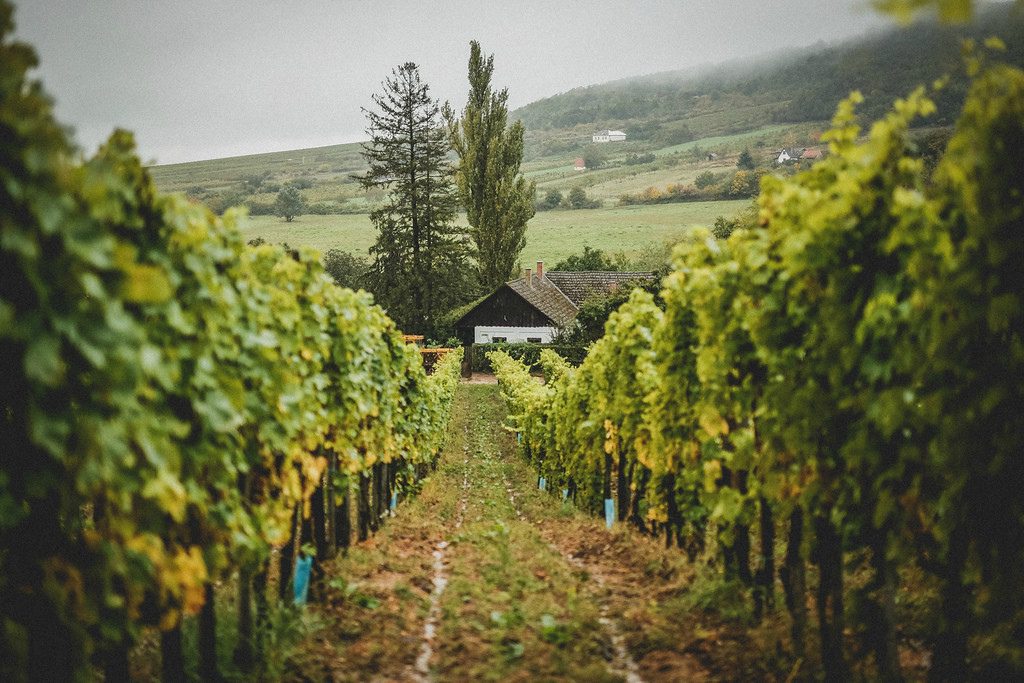
It is not much of an exaggeration to say that Somló is located at the other end of the country, in the mid-west of Hungary, where the climate is rather temperate continental and, although Lake Balaton is not far away, it is not close enough either to have a definite moderating influence on the wine region. In Tokaj, the soil is volcanic, but the composition of the different vineyards is extremely varied, with rhyolite, andesite, volcanic debris, zeolite, rhyolitic clay, limestone, loess and these are just the most well-known soil types. In contrast, the composition of the soils of Somló is somewhat more homogeneous, consisting mainly of basaltic loess, tuffaceous deposits. These differences can also be observed in the style of the wines: while in Tokaj wines the minerality is an additional feature, in Somló wines the overriding character is the mineral character.
With three different bottlings, Aszús feature heavily in the line-up. What do you think distinguishes Tokaj Aszú from other sweet wines in the world?
First of all, the terroir of Tokaj, i.e. the location and climate of the Tokaj wine region, the presence of the two rivers Tisza and Bodrog, which ensure the formation of the right humidity in the wine region, which is essential for the development of botrytis in autumn. The special mineral-rich volcanic soils of the vineyards in the wine region, the exposure of the vineyards, the altitude above sea level and, of course, the indigenous varieties such as Furmint, Hárslevelű, Kabar, Zéta, Kövérszőlő and the international variety Muscat Blanc.
Last but not least, the centuries-old tradition and knowledge of hand-harvesting the shrivelled berries for the aszú, the use of a completely unique process, the maceration of the aszú “dough” and the special ageing method all combine to give Tokaj Aszú its unique character. And speaking of the unique aroma profile, the acidity of Tokaj Aszú is significantly higher than that of other sweet wines, thanks to the varieties (Furmint, Hárslevelű), the mineral-rich volcanic soils and the aspect of the vineyards.
Thanks to this lively acidity, even the 5-6 puttonyos Aszús avoid being overly sweet, because the high acidity counterbalances the sugar content, giving the wine freshness and vibrancy, which, along with the notes of Turkish delight and marmalade, is complemented by a cool, stony minerality, giving it a completely unique character and extraordinary ageing potential. The combination of these qualities is very rare in the world, and this is what makes Tokaj Aszús so special.
You are a seasoned lecturer on Hungarian wines for international audiences. Based on the feedback, what aspects of Hungarian wine do they find interesting?
We can show international audiences grape varieties (Furmint, Kékfrankos), unique styles of white and red wines (Bikavér or 100% Cabernet Franc) that they cannot find anywhere else and are not easy to come by. Connoisseurs are looking for special wines with unique character, wines that are rare, and Hungarian wines tick these boxes. My experience over many years is that international consumers are surprised to find that both our white wines and our premium red wines are of such high quality, and at an affordable price. For us, the way to success is not through quantity, but through uniqueness and high quality, and this is what foreign consumers appreciate, and this is what we need to show the world.
For more information about the masterclasses click HERE!